The Fourfold Path of Wagner's Music Dramas
Richard Wagner conceived his mature operas not as mere entertainments but as profound spiritual encounters, dramas designed to provoke reflection, awaken inward feeling, and invite audiences toward a deeper engagement with the great questions of existence. In the tradition of Aeschylus and the ancient tragedians, he envisioned the theater as a space of communal and contemplative seriousness, where myth could speak to modern souls with the same force it once held for its earliest hearers.
Wagner composed thirteen operas, though he later distanced himself from his first three as youthful and formative works. His subsequent Romantic operas — Der fliegende Holländer, Tannhäuser, and Lohengrin — stand as beloved and transitional creations, preparing the way for his four mature music dramas: Der Ring des Nibelungen, Tristan und Isolde, Die Meistersinger von Nürnberg, and Parsifal.
Mystical Wagner takes these four works as its principal subject. Each opens onto a distinct realm of spiritual exploration: the mythological breadth and ethical reckoning of The Ring; the transcendent passion and tragic insight of Tristan und Isolde; the humane warmth and communal wisdom of Die Meistersinger; and the sacred, contemplative solemnity of Parsifal. Taken together, they trace a single pilgrimage of the spirit, a fourfold path:
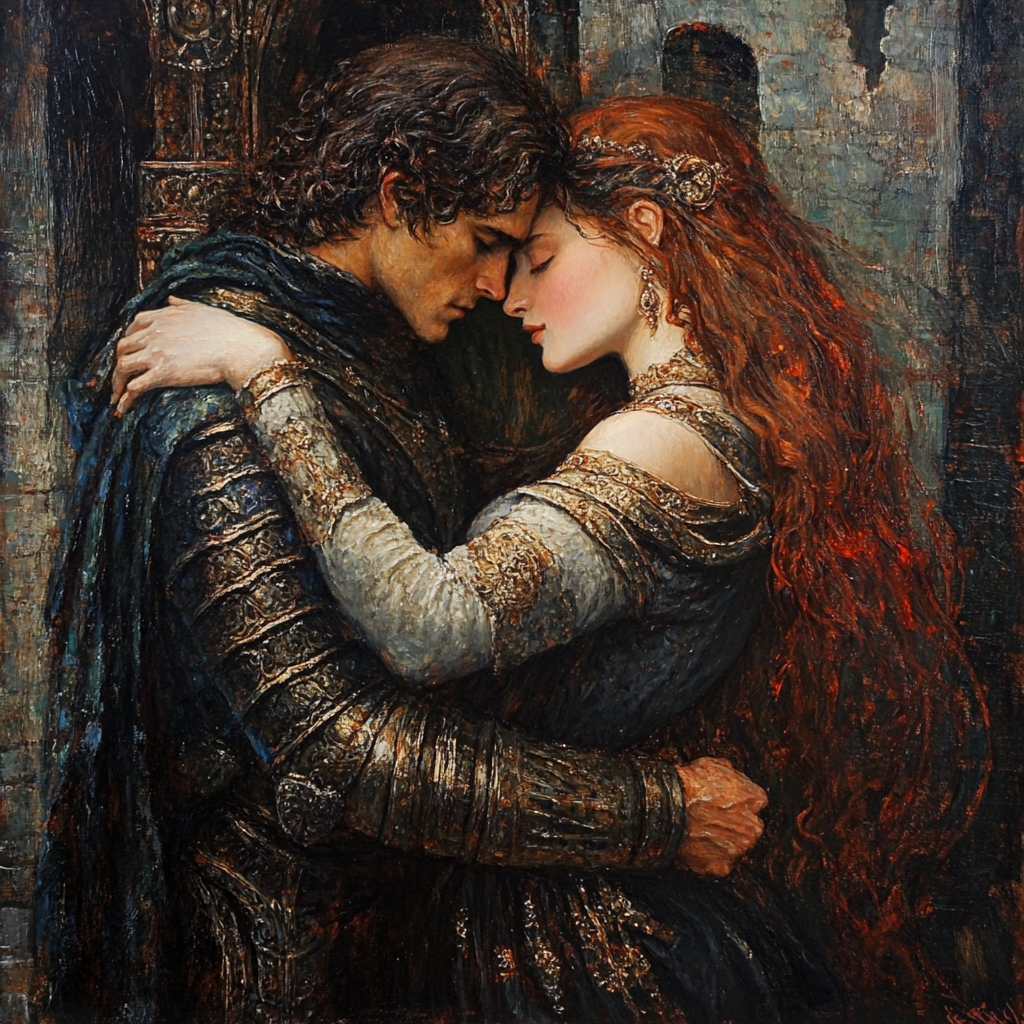
Tristan und Isolde
Revelation
The radical unveiling of love as the supreme metaphysical force, transcendent and eternal.
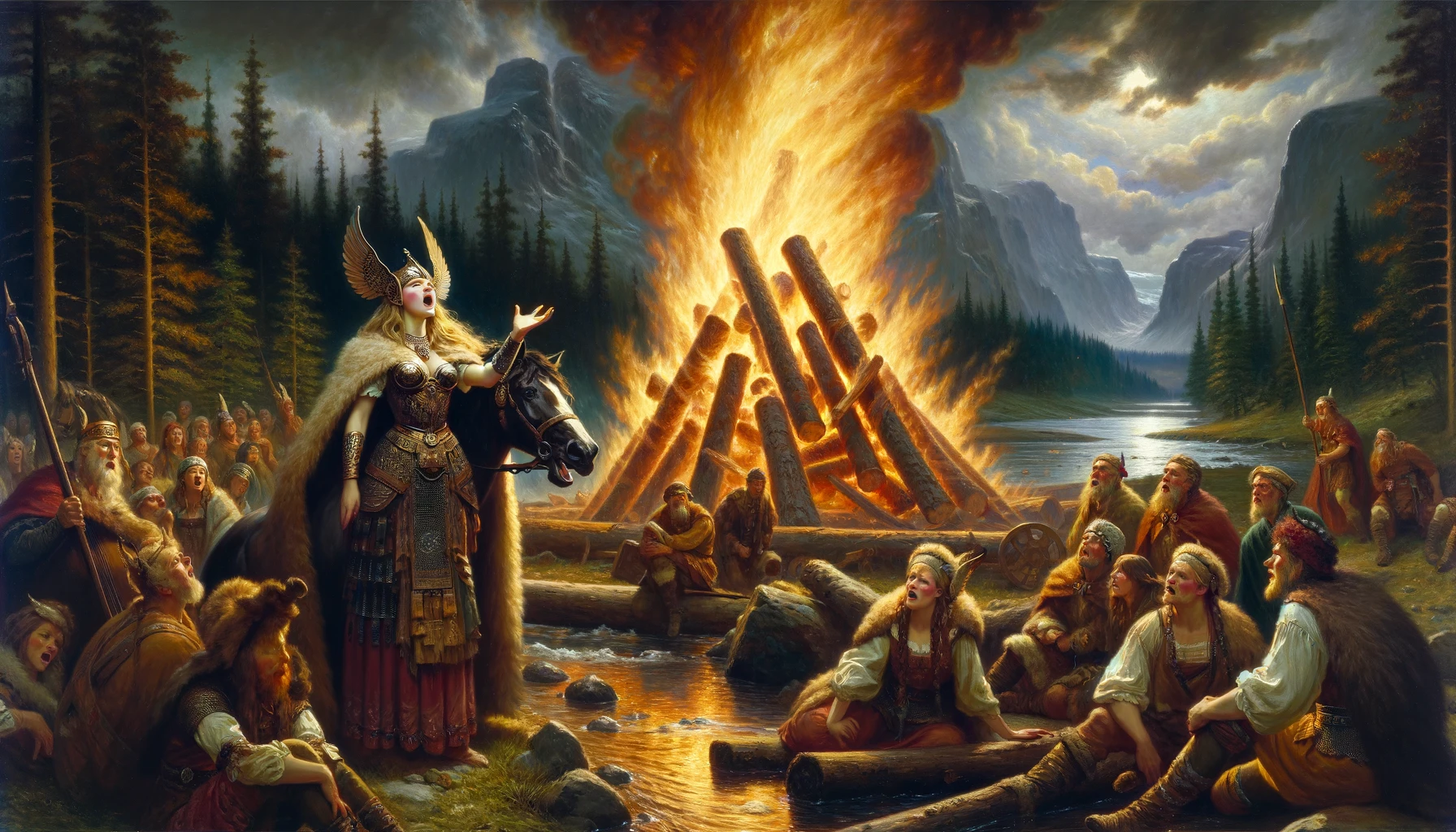
The Ring
Revolution
A critique and collapse of the world order based on power, greed, and conquest, supplanted by love.

Die Meistersinger
Restoration
A vision of a reconciled society, healed after revolution, finding balance between tradition and innovation.
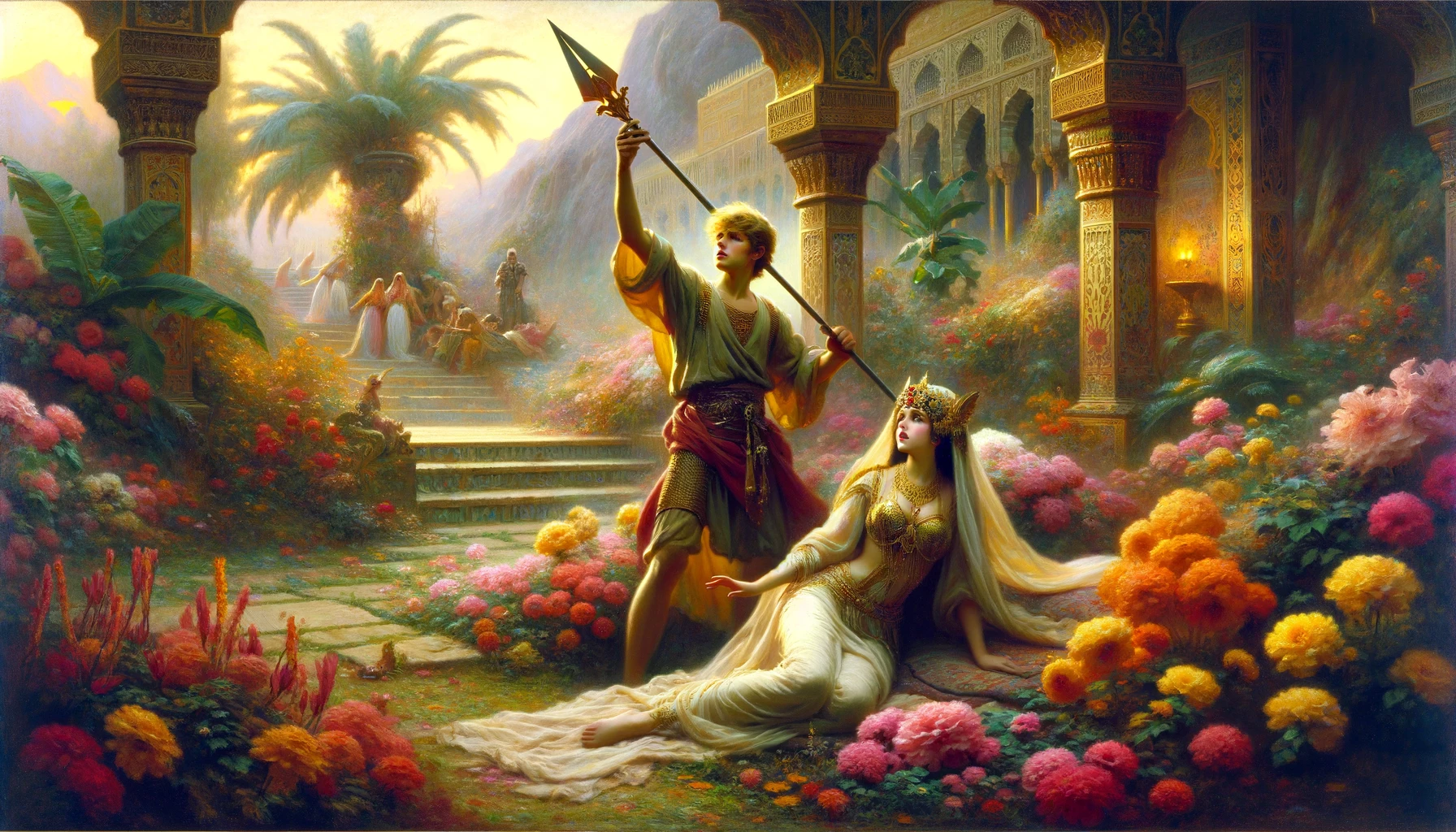
Parsifal
Redemption
The awakening of universal compassion, granting the wisdom to heal the wounded world.
What We Mean by “Mystical”
The word mystical has fallen on difficult times. In contemporary usage it often evokes crystals and tarot cards, occult paraphernalia, or the diffuse spirituality of the wellness industry. Mystical Wagner uses the term in an older and more exacting sense: the sense familiar to scholars of Meister Eckhart, Jalāl ad-Dīn Rūmī, the anonymous author of the Cloud of Unknowing, the Kabbalists of medieval Spain, and the rishis of the Upanishads.
In this tradition, mysticism names the disciplined inward path toward direct knowledge of the Absolute. Its hallmark is gnosis: experiential insight rather than doctrinal assent, attained through contemplation, ethical refinement, and the gradual loosening of the ego's grip on experience. Across the great traditions — Christian apophatic theology, Sufism, Jewish Kabbalah, Advaita Vedānta, and Mahāyāna Buddhism — one finds a recognizable family of claims: that ordinary consciousness is not the final word, that the boundary between self and world is more porous than it appears, and that what the mystics call union is less an acquisition than a remembering.
This is neither occultism nor easy comfort. It is a serious intellectual and contemplative inheritance, and its literature is among the most philosophically rigorous in the human record. Mystical Wagner approaches the music dramas in this light, as works that, whatever else they may be, belong to this longer conversation about the nature of consciousness, love, suffering, and release.
A Philosophically Plausible Mysticism
Wagner was steeped in the philosophical currents of his century. His discovery of Schopenhauer in 1854 transformed his creative life and shaped Tristan, Meistersinger, and Parsifal at the deepest level. Through Schopenhauer he absorbed the first serious Western engagement with Indian thought — the Upanishads and early Buddhism — and he folded these currents together with the Christian mystical tradition he had known since childhood. The result is a body of work whose philosophical seriousness is inseparable from its artistic achievement.
The mysticism we find in Wagner is therefore not a flight from reason but a species of philosophy in dramatic form. Its central intuitions — the primacy of will and consciousness, the illusoriness of the isolated self, the redemptive power of compassion — resonate with questions now being taken up afresh in the philosophy of mind. Contemporary debates around idealism, panpsychism, and the hard problem of consciousness have returned to terrain that Schopenhauer and the Vedānta traced long ago. Whatever one's final position on these questions, the mystical traditions offer a conceptual vocabulary worth taking seriously, and Wagner's dramas are among its most powerful imaginative embodiments.
Our aim, then, is to treat Wagner's spirituality as academically plausible: grounded in texts, traditions, and arguments; continuous with a long line of philosophical and contemplative inquiry; and open to scholarly scrutiny rather than sheltered from it.
What You Will Find Here
Interactive librettos. Poems synchronized to the audio, so that a passage under discussion can be heard as it is read. Original English translations made under a deliberately foreignizing discipline: philosophical precision first; Stabreim and rhyme preserved; phrases aligned to the vocal score; an archaic register answering to the German.
Prose works. The essays in overview, each summarized and linked to the corresponding volume of W. Ashton Ellis's translation, so that a reader can find the passage in question without excavating eight volumes of Victorian prose.
Scholarship. A directory of more than one hundred Wagner scholars, sorted into eight interpretive registers, intended as a map of the critical terrain rather than a bibliography: who argues what, against whom, and on what grounds.
Documents. Cosima's diaries and the correspondence, including the Liszt and Wesendonck letters, presented in searchable form. These are the raw material on which every interpretation offered here ultimately rests, and readers are invited to check the work.
An Invitation
This site is offered to anyone who senses that something deep is at work in these operas and wishes to explore it more closely. You need not be a specialist, a devotee, or even a settled admirer. The music dramas have spoken to listeners across a remarkable range of temperaments and convictions, and they continue to reward patient attention in proportion to the attention given.
For some, Wagner becomes a lifelong companion, one of those rare artists whose works seem to widen, over the years, into something like a sustained philosophical and spiritual inquiry. For others, his dramas remain powerful but more occasional presences. Either way, we hope the essays, translations, and resources gathered here deepen the encounter.
Mystical Wagner is, above all, a place for reflective listening: for thinking with Wagner rather than merely about him, and for taking seriously the possibility that his mature works belong to the long tradition of art that seeks, in the midst of ordinary life, to point beyond it.